
Mobile Application Case Study
Talabat
Loyalty System Migration That Scaled Across Markets
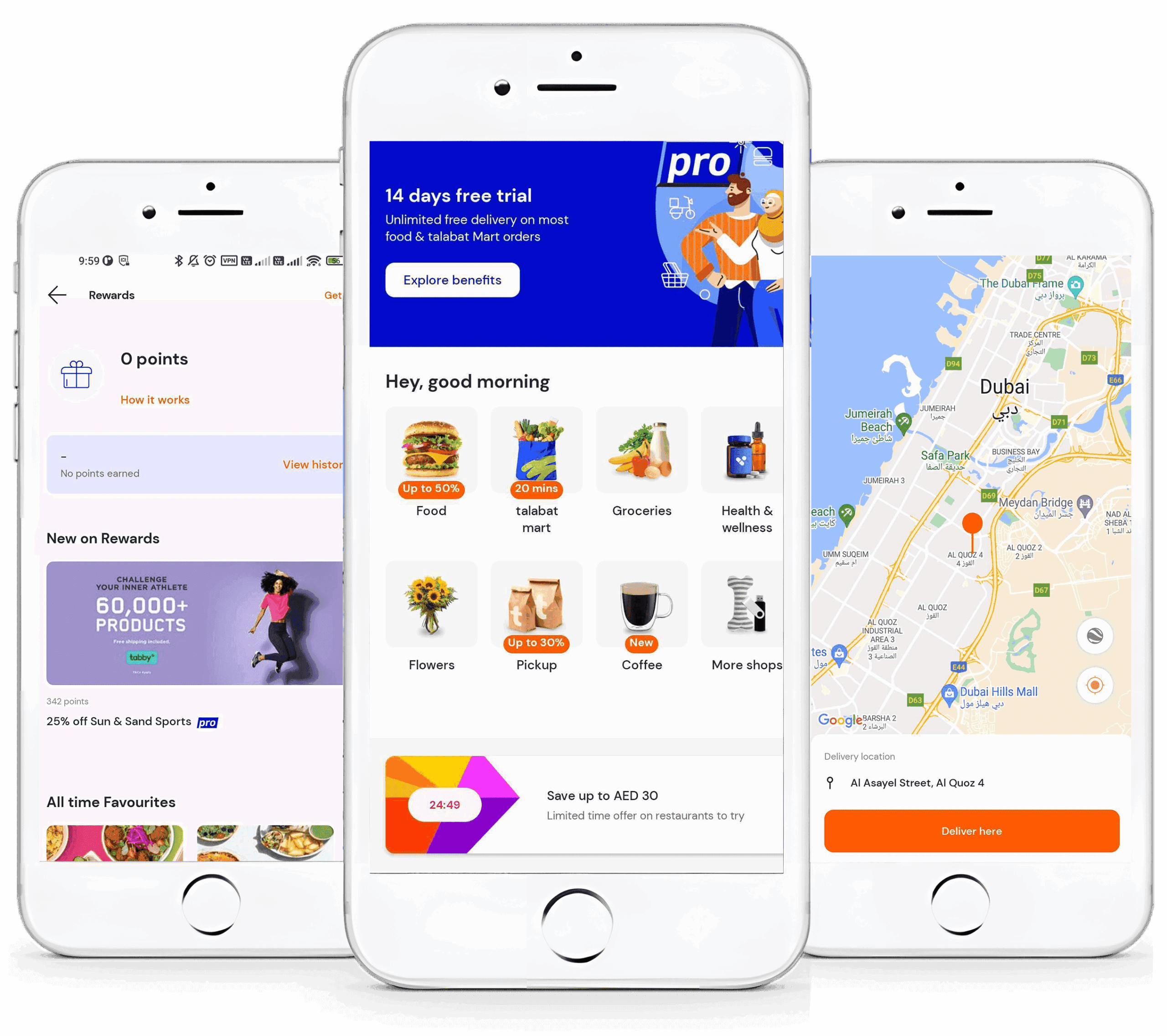
Client profile
Talabat is the leading food and grocery delivery platform across the Middle East and North Africa, operating in Kuwait, UAE, Saudi Arabia, Egypt, Qatar, Oman, Bahrain, Jordan, and Iraq. With over 10 million downloads on Google Play, it serves as a core infrastructure for e-commerce convenience across the region.
Challenge
As Talabat expanded across the MENA region, its native mobile architecture became a constraint – particularly around the Rewards (loyalty) system, a feature critical to user retention and brand trust.
The company needed to:
- Migrate the Rewards feature seamlessly to Flutter
- Introduce new loyalty-driven capabilities to engage users
- Resolve legacy bugs affecting stability under high user loads
- Preserve app performance while enabling faster iteration and cross-platform efficiency
But this wasn’t just a technical upgrade.
It was a strategic move to protect millions of user relationships while laying the groundwork for scalable loyalty innovation.
The starting point made it clear:
- Rewards logic was deeply embedded in native code
- Flutter existed in the tech stack, but wasn’t fully adopted
- Performance expectations were non-negotiable — any drop risked user churn
- Teams were distributed across mobile and backend, with complex dependency chains
- The migration needed to happen fast, with zero regression and no service disruption
In short: high visibility, high stakes, no margin for error.
Our Strategic Approach
We took the lead on migrating the entire Rewards module from native code to Flutter – ensuring full cross-platform functionality without sacrificing speed, responsiveness, or architecture integrity.
Key Focus Areas:
- Full rewrite of Rewards UI/logic in Flutter + Dart
- Collaboration across hundreds of devs (mobile & backend) for smooth handoffs
- Feature parity with the original native version, plus performance optimizations
- Frontend improvements to enhance UX clarity and interaction speed
- Codebase consolidation to ensure long-term maintainability and feature rollout velocity
Throughout the project, we maintained transparent, proactive communication — flagging blockers early and aligning with product leads to avoid rework or rollout delays.
Execution: Seamless Migration Under Pressure
We led the end-to-end migration of Talabat’s Rewards system — under real-time traffic, tight coordination with multiple teams, and zero room for disruption. Every step was focused on maintaining user trust while building a future-proof foundation.
Rebuilt Rewards Feature Fully in Flutter
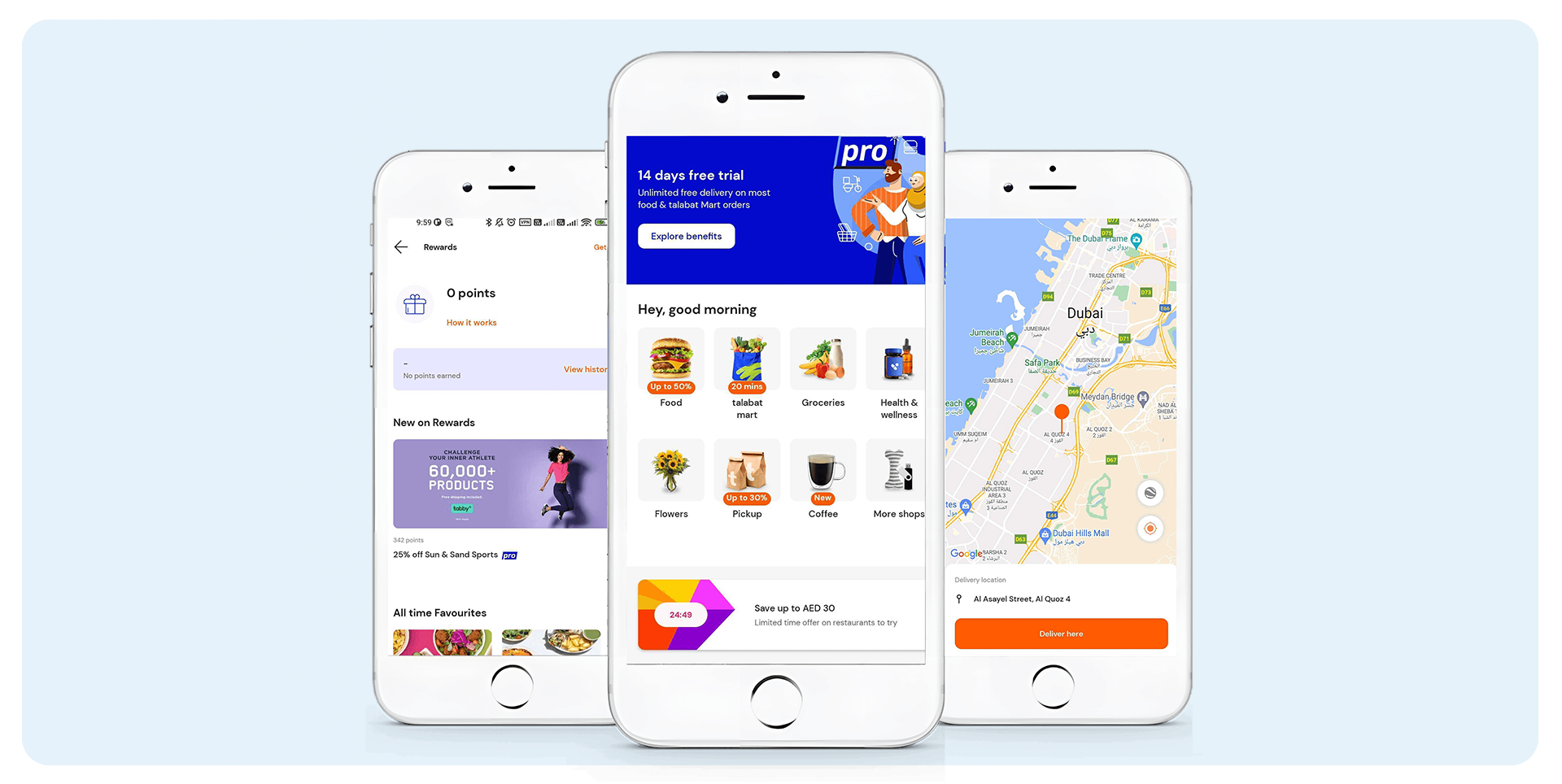
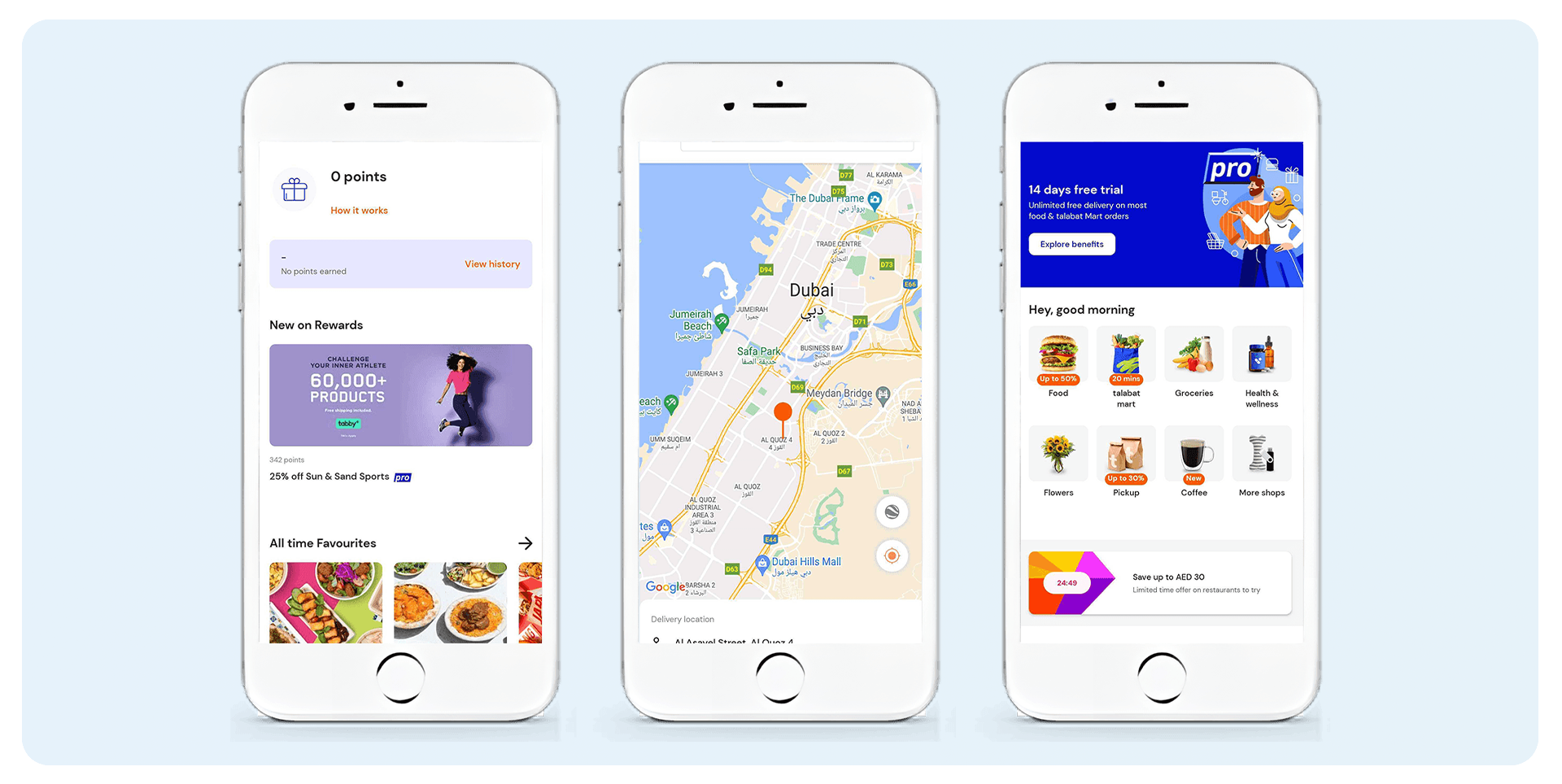
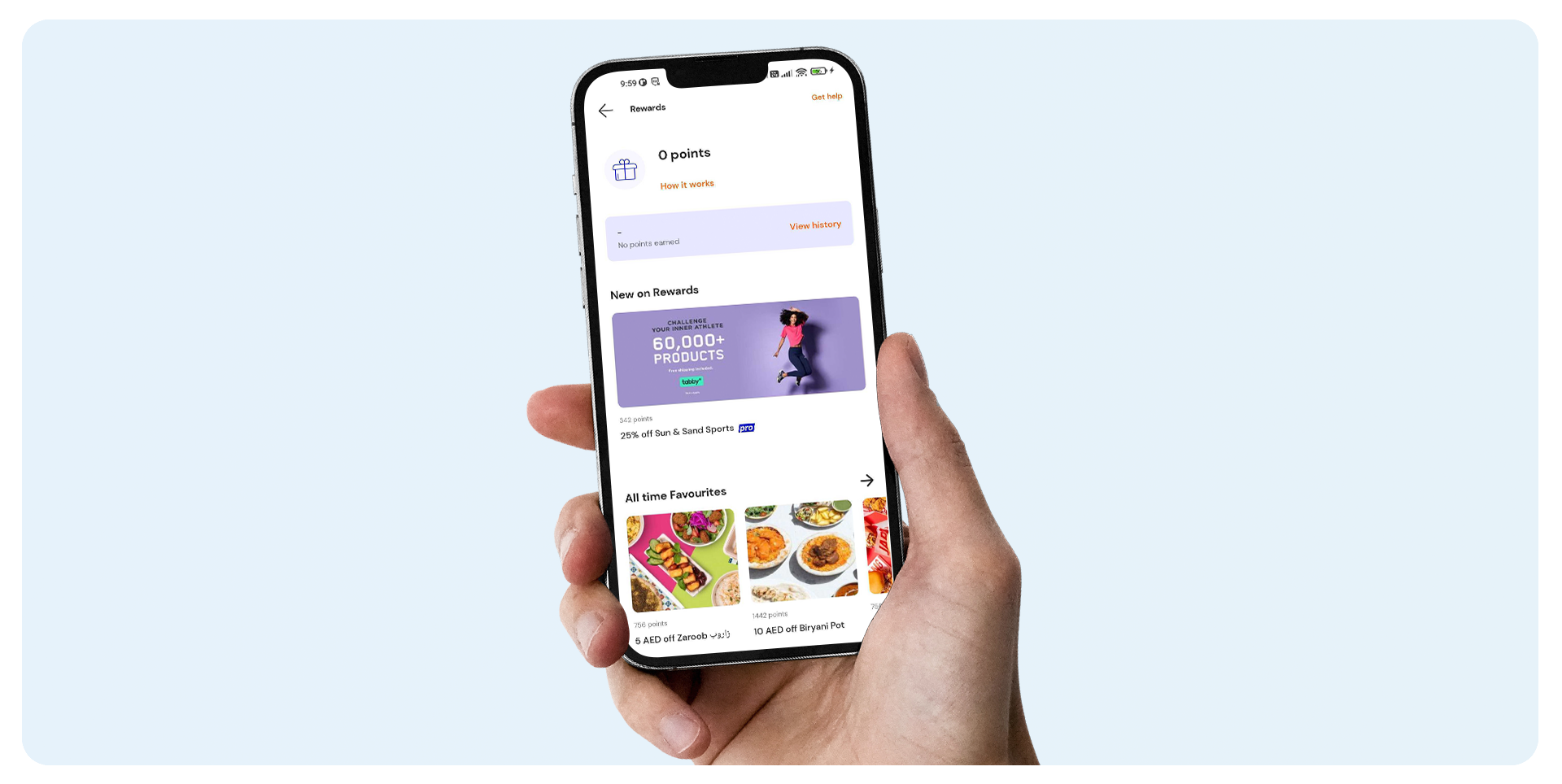
We re-architected the entire loyalty module from native Android code to Flutter. The rebuild replicated all business logic, flows, and UI behavior — while laying the groundwork for faster iteration and unified code management across platforms.
Enhanced UI with Flutter-Native Design
We used Flutter’s native capabilities to match Talabat’s existing visual identity — while modernizing interface elements for speed, accessibility, and responsiveness. The updated UI delivered better performance with a smoother in-app experience across devices.
Implemented with CI Workflows
We built and deployed the feature using GitHub-driven workflows and CI pipelines — ensuring every commit, review, and merge met release standards. This eliminated manual errors, streamlined collaboration, and supported clean deployment to production.
Conducted End-to-End QA in Collaboration
With Product and Engineering Leads Our team led cross-functional QA testing — across device types, network conditions, and user states — to eliminate edge-case failures. Every scenario was validated jointly with product and engineering stakeholders to avoid post-release defects.
Refactored Key Logic
We worked closely with backend teams to refactor API calls, session logic, and data models to ensure seamless communication. The refactor reduced tech debt and ensured consistent behavior between iOS, Android, and backend systems — without duplicating logic.
Ensured No Disruption to Production
All changes were staged, tested, and deployed incrementally using feature flags and controlled rollouts. This guaranteed that no user experienced downtime, regression, or feature loss during transition — preserving Talabat’s service reputation across markets.
Talabat Tech Stack
To support Talabat’s transition toward a unified, cross-platform codebase, we leveraged a modern and scalable technology stack.
Flutter with Dart served as the core framework for rebuilding the app’s interface and logic, enabling smoother migration from native Android to a maintainable shared codebase. Android Studio remained the primary development environment, allowing full control over performance, debugging, and platform-specific optimizations.
Version control and code quality were maintained through Git and GitHub, ensuring seamless collaboration, branching, and QA workflows across teams. Our deep expertise in native Android architecture helped align the migration with legacy components and business-critical logic.
All development followed Agile methodology, tightly synced with Talabat’s internal product roadmap, rollout schedules, and stakeholder feedback cycles.

Results:
The Talabat Rewards migration wasn’t just successful — it became a model for how to execute high-stakes product evolution without disruption.
Operational Outcomes
- Full Rewards module migrated to Flutter — now live and stable across all operating markets
- System performance improved, and codebase is now significantly easier to maintain
- Rollout was executed with zero user disruption, preserving trust and app continuity
- Cross-platform consistency achieved across Android and iOS — no drift, no duplication
- Mobile teams now ship faster with a unified Flutter codebase
- Product team is empowered to iterate on loyalty features independently, without being blocked by dev cycles
But the real win? It wasn’t just operational – it was structural.
- Talabat can now roll out loyalty-driven features faster, across regions and platforms
- Engineering complexity decreased, while preserving functionality depth
- The new Flutter foundation sets the stage for future migrations across other verticals
- Business and product teams now operate with less friction, more autonomy, and real scalability
- Above all, the migration protected user trust and preserved brand equity — even while transforming the tech that delivers it.
This wasn’t about building a feature.
It was about reinforcing Talabat’s position at the top — with architecture that performs, scales, and wins.
What our clients says about outcome of the collaboration?
We sent this question directly to our partners
Working with Codeflyers has been a game-changer for us! Their innovative approach and unparalleled technical expertise have propelled our project to new heights. We’re thrilled with the progress and their proactive attitude.
Christoffer Apneseth
CTO at Field
Our collaboration with Codeflyers is a perfect match! Their team is not only competent but also incredibly dedicated. The application is growing stronger, all thanks to their commitment and attention to detail.
Even Reitan
Strategy & Business Development Manager at Telenor
Let’s build your
product together!
We shorten the time from problem to solution, which is why we focus on agile communication and action. We like to get straight to the point, so let’s schedule a free 20-minute consultation. No forms, no waiting.
Speak directly with Radek Lejsza, COO of Codeflyers

Frequently asked questions
Clear answers to the questions we hear most often
Why did Talabat migrate its Rewards system to Flutter?
Talabat needed a more scalable and maintainable architecture for its loyalty platform. Migrating the Rewards module to Flutter enabled the company to unify development across Android and iOS, reduce duplicated work, accelerate feature releases, and maintain a consistent user experience across markets.
How was the migration completed without disrupting users?
The migration was introduced gradually using feature flags, controlled rollouts, automated CI workflows, and extensive end-to-end testing. This approach allowed the team to identify and resolve potential issues before full deployment, ensuring zero downtime, regression, or feature loss for users.
What parts of the Rewards system were rebuilt?
The entire Rewards module was rebuilt in Flutter and Dart, including its user interface, business logic, user flows, API communication, session handling, and data models. The new version maintained full feature parity with the native application while improving performance and maintainability.
How did the migration improve Talabat’s development process?
The unified Flutter codebase reduced engineering complexity and eliminated inconsistencies between Android and iOS. Mobile teams can now develop, test, and release loyalty features faster, while the product team has greater flexibility to introduce new capabilities across multiple markets.
What were the main results of the Talabat Rewards migration?
The Rewards module was successfully launched across Talabat’s operating markets with no disruption to users. The migration improved system stability, cross-platform consistency, code maintainability, and release speed. It also created a scalable foundation for future loyalty features and additional Flutter migrations.